


The quiet challenge nobody talks about:
arriving at a client’s apartment and cooking in an unfamiliar kitchen.

There is a particular kind of stillness that greets a Manhattan private chef the moment a client closes the door behind them and leaves for the evening. The apartment is yours now — or rather, it isn’t. It never is. You are standing in someone else’s carefully curated life, surrounded by their copper pots, their inherited Dutch oven, their coffee-stained cutting boards, and the peculiar logic of a kitchen drawer system that makes perfect sense to exactly one person on earth, and that person is not you.
This is the quiet challenge that never makes it into the conversation when clients hire a Manhattan private chef. They imagine the menu, the plating, the wine pairing. They do not imagine the eleven minutes you spend hunting for a whisk.
The Kitchen as Unknown Territory
Every private kitchen in New York City has its own personality, and that personality is rarely straightforward. A Park Avenue co-op might boast a Sub-Zero refrigerator the size of a small conference room and a six-burner Wolf range — and yet somehow not own a single sharp knife. A TriBeCa loft conversion might have a beautifully designed open kitchen with three linear feet of prep space and countertops that exist primarily as aesthetic objects rather than functional surfaces.
Unfamiliar kitchen navigation is, in many ways, the most underrated skill in private dining. A restaurant chef works the same line for years, building muscle memory into every reach and pivot. A Manhattan private chef builds nothing that lasts. Each engagement is a cold start: new stove calibration, new oven temperament, new spatial logic, new everything.
Confessions of A Manhattan Private Chef in triage mode
Within the first ten minutes of arrival, a seasoned Manhattan private chef learns to conduct a rapid kitchen audit. What pans are here, and more importantly, which ones can actually be trusted? Does this induction cooktop require a specific type of cookware the client forgot to mention? Is the oven fan convection or is it simply decorative? Where is the trash, and will accessing it require navigating through a dining room full of seated guests at an inconvenient moment?
These are not small questions. They shape the entire architecture of the evening.
The Psychology of Performing Under Uncertainty
There is a discipline specific to luxury private dining that has nothing to do with classical technique and everything to do with composure. Clients are paying — sometimes extraordinarily well — for an experience that feels effortless. They do not want to know that you discovered, forty minutes before service, that their oven runs twenty degrees hot and there is no thermometer in the building.
They want duck confit that arrives perfectly rendered, regardless of what it took to get there.
This is where experience becomes invisible armor. A chef who has cooked in dozens of private homes has already met most of the variables. They have cooked on a four-burner range designed for reheating takeout while preparing a seven-course tasting menu. They have improvised mise en place stations on bathroom counters, ironing boards, and once, memorably, a very stable Louis XVI console table. A Manhattan private chef has learned to read a kitchen the way a sommelier reads a cellar — quickly, accurately, and without broadcasting the effort.
The mental adjustment required is significant. Restaurant training builds confidence through repetition. Private chef work builds confidence through adaptation, which is a harder and lonelier form of mastery.
Practical Strategies That Actually Work
What separates a composed service from a chaotic one, when the kitchen is unfamiliar, comes down to preparation discipline. The most effective private chefs — those who sustain long-term client relationships in competitive markets like New York — treat pre-service logistics with the same seriousness as the menu itself.
Knife roll and mise en place kit. Your tools travel with you. Every time. A reliable chef’s knife, a paring knife, a reliable peeler, and a small digital thermometer are non-negotiables. Relying on a client’s equipment for precision tasks is a gamble that rarely pays.
Menu architecture built for flexibility. The best menus for Manhattan private dining experiences are designed with what culinary professionals sometimes call graceful degradation — the ability to execute beautifully even if one element needs to be adjusted on the fly. A sauce that works in a saucepan or a sauté pan. A protein that can accommodate a slightly different temperature curve. Plating concepts that read elegantly on whatever dishware exists.
Arrival time is a professional asset. An hour before service is not early. It is baseline. Two hours before a complicated menu is reasonable. The time investment in proper setup — understanding the space, completing mise en place, locating every tool that will be needed mid-service — is always returned in the quality and calm of the final experience.
Communication with the client in advance. A brief, professional intake conversation about kitchen equipment available, any appliance quirks, and access logistics eliminates most serious surprises. The James Beard Foundation’s resources on culinary professionalism consistently underscore that the most celebrated Manhattan private chef professionals distinguish themselves not just through cooking skill but through client relationship management.

The Unremarkable Triumph
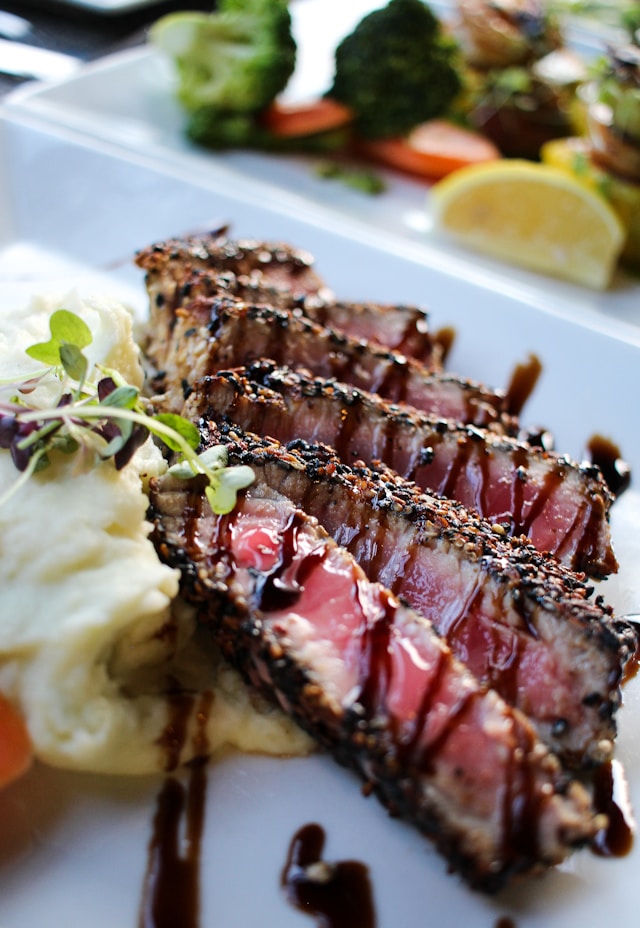
The honest truth about cooking in a client’s kitchen is that when everything goes well, no one notices. The guests do not think: remarkable, given that the Manhattan private chef had never touched this stove before tonight. They think: the duck was extraordinary. They think: I must have them back.
That invisibility is the point. The unfamiliar kitchen, the missing whisk, the oven that runs hot — all of it disappears into the background of an evening that felt, from the outside, entirely inevitable.
That is the work. And it is considerable.



Goodness, I had no idea that you had to travel and bring all the stuff with you.