


Nestled in the sun-drenched southeast of France, Provence is a region that captivates the senses with its vibrant landscapes, rich history, and cultural allure. Stretching from the Mediterranean coast to the rugged Alps, Provence is a mosaic of charming villages, rolling vineyards, olive groves, and, most iconically, its lavender fields. These purple-hued expanses are not only a visual spectacle but also the heart of a thriving industry centered on lavender essential oils, which fuel the region’s renowned perfume and soap industries. To explore Provence is to immerse oneself in a world where nature, tradition, and craftsmanship intertwine, with lavender fields as the fragrant thread that binds them.

The Lavender Fields of Provence
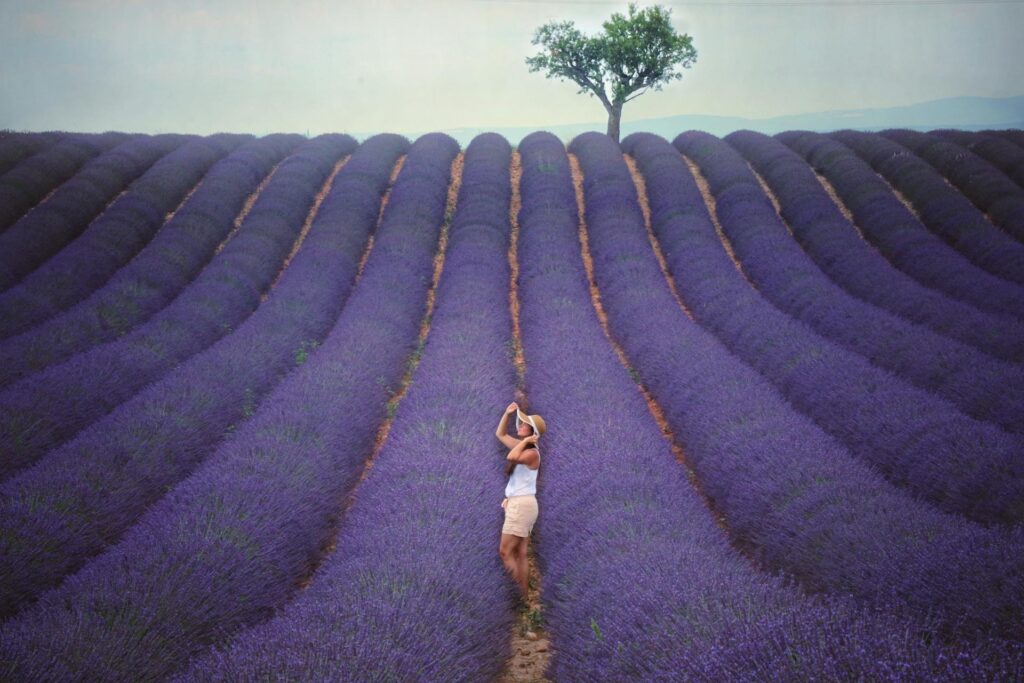
The lavender fields of Provence are a hallmark of the region, painting the landscape in vibrant shades of purple from June to August. The most famous lavender fields are the Luberon Valley, the Plateau de Valensole, and the region around Sault, often referred to as the “lavender capital” of Provence. These fields, with their neat rows of Lavandula angustifolia (true lavender) and Lavandula x intermedia (lavandin), stretch across rolling hills, their vivid colors contrasting against the golden stone of medieval villages and the azure sky. The sight of these lavender fields under the Provençal sun, often accompanied by the hum of bees and the gentle rustle of warm breezes, is nothing short of magical.
Lavender thrives in Provence’s Mediterranean climate, characterized by hot, dry summers and mild winters. The region’s calcareous, well-drained soils provide ideal conditions for lavender cultivation, which has been a part of Provençal agriculture for centuries. While lavender was historically grown for medicinal purposes, its modern cultivation of lavender fields is largely driven by the demand for its essential oil, a cornerstone of the region’s economy and cultural identity.
The lavender season peaks in July, when the fields are in full bloom, attracting visitors from around the world. Festivals such as the Fête de la Lavande in Sault celebrate the harvest with parades, markets, and demonstrations of traditional lavender-cutting techniques. Visitors can wander through lavender fields, visit distilleries, and purchase lavender products ranging from sachets to honey. The sensory experience—rows of purple swaying in the breeze, the heady fragrance in the air—is quintessentially Provençal, evoking a sense of timeless beauty.
The Lavender Fields & The Essential Oil Industry

At the heart of Provence’s lavender legacy is the production of lavender essential oil, extracted through steam distillation of the plant’s flower spikes. This process, refined over generations, captures the plant’s aromatic compounds, yielding an oil prized for its calming, antiseptic, and anti-inflammatory properties. The two primary varieties used are true lavender, known for its delicate, floral scent, and lavandin, a hybrid with a stronger, camphorous note used in larger-scale production.
The essential oil industry is deeply rooted in Provence’s rural economy. Small-scale, family-run farms in areas like Valensole and the Luberon work alongside larger cooperatives to produce high-quality oils from their lavender fields. The process begins with the hand or mechanical harvesting of lavender, followed by distillation in copper stills, a method that preserves the oil’s purity. A single hectare of lavender can yield 15 to 20 liters of essential oil, a labor-intensive endeavor that underscores the region’s artisanal ethos.
Provence’s lavender oil is a global benchmark, with the region’s appellation d’origine contrôlée (AOC) designation for “Huile Essentielle de Lavande de Haute-Provence” guaranteeing authenticity and quality. This protected status, similar to that of Champagne for wine, ensures that only lavender grown in specific areas of Provence, using traditional methods, can bear the label. The AOC designation has helped maintain the region’s reputation while supporting local producers in a competitive global market.

Lavender in Perfume and Soap
The essential oil extracted from Provence’s lavender fields is the lifeblood of the region’s perfume and soap industries, particularly in the town of Grasse, the world’s perfume capital. Located in the hills above the French Riviera, Grasse has been a hub of fragrance production since the 16th century, and lavender is one of its most cherished ingredients. The oil’s versatile scent profile—fresh, floral, and slightly herbaceous—makes it a staple in both fine fragrances and everyday products.
In perfumery, lavender essential oil is prized for its ability to blend harmoniously with other notes, such as citrus, rose, or woody accords. Iconic fragrances, from classic colognes to modern niche perfumes, often feature Provençal lavender as a top or heart note, evoking elegance and tranquility. Houses like L’Occitane en Provence, founded in the region in 1976, have built global brands around lavender-based products, showcasing the oil’s versatility in eaux de toilette, body sprays, and scented candles.
The soap industry, too, owes much to lavender. Provençal soaps, often crafted with olive oil or shea butter, are infused with lavender essential oil for its soothing properties and unmistakable scent. The iconic savon de Marseille, a traditional hard soap, frequently incorporates lavender, blending practicality with luxury. Artisanal soapmakers in villages like Gordes and Apt produce small batches, often enriched with lavender buds or oil, which are sold in local markets and boutiques. These soaps are not only cleansing but also therapeutic, used for their calming effects on the skin and mind.
Beyond Grasse, lavender’s influence permeates Provence’s artisanal culture. Distilleries and cooperatives sell essential oils directly to consumers, while boutiques offer lavender-infused lotions, bath salts, and aromatherapy products. The oil’s natural antiseptic qualities make it a popular ingredient in skincare, while its relaxing aroma is a staple in wellness products, from massage oils to pillow mists. This fusion of tradition and innovation has made lavender a symbol of Provençal craftsmanship, bridging the gap between rural heritage and global demand.

Cultural and Economic Significance
Lavender is more than a crop in Provence; it’s a cultural emblem. The lavender fields inspire artists, photographers, and writers, who capture their beauty in paintings, novels, and travelogues. The fragrance industry, rooted in lavender, supports thousands of jobs, from farmers to perfumers, while tourism driven by the lavender fields boosts the regional economy. In 2024, Provence welcomed millions of visitors, many drawn by the promise of experiencing the lavender season firsthand.
However, challenges loom. Climate change, with its unpredictable weather patterns, threatens lavender yields, while competition from synthetic oils and cheaper lavender from other regions pressures local producers. Sustainable practices and the AOC designation help mitigate these issues, ensuring that Provence’s lavender fields remains synonymous with quality.
Notes
Provence’s lavender fields are a testament to the region’s ability to blend natural beauty with cultural and economic vitality. From the rolling purple hills of Valensole to the perfumeries of Grasse, lavender weaves a fragrant narrative through Provence’s identity. The essential oil industry, with its roots in centuries-old traditions, continues to thrive, producing perfumes and soaps that carry the scent of Provence to the world. To visit the lavender fields is to step into a living postcard, where the air is perfumed, the colors are vivid, and the spirit of Provence is palpable in every bloom.


I learned a lot about lavender here today. Thanks.