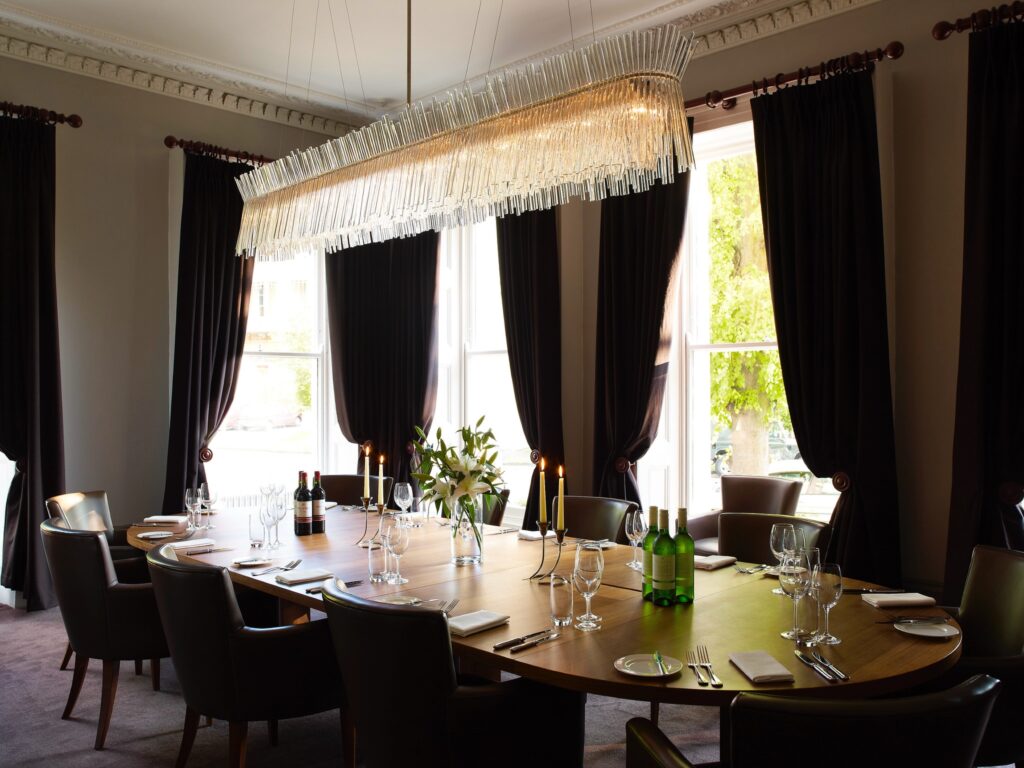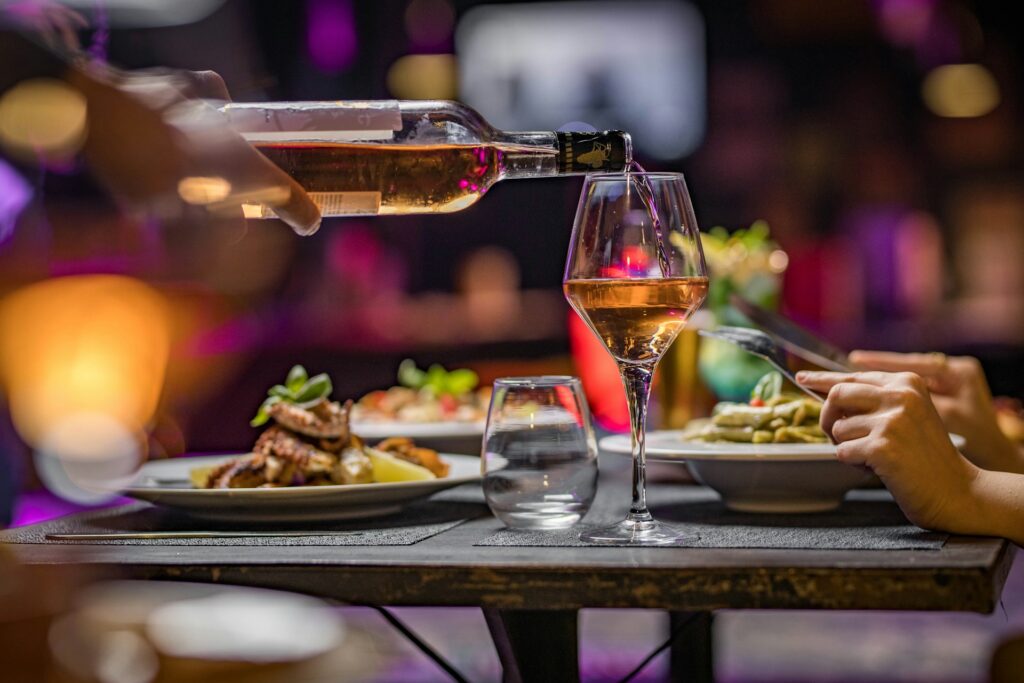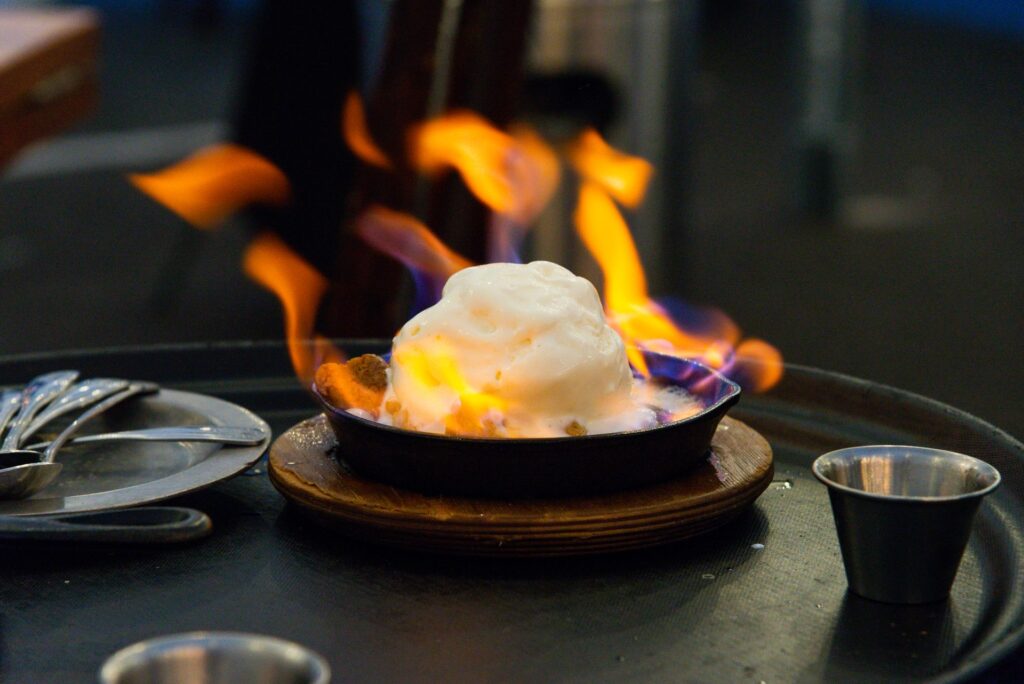
There is a moment, increasingly rare in the modern dining landscape, sans ‘tableside dining’ when a formally dressed captain wheels a small silver cart to your table, arranges his tools with quiet deliberation, and proceeds to prepare something extraordinary directly in front of you. A whole fish deboned with surgical precision. A sauce finished in a copper pan over a live flame. A dessert set dramatically alight while the dining room dims around you. For a few minutes, you are not merely eating — you are watching a performance that has been refined over centuries, executed by someone who has spent years mastering a craft most of the world has forgotten exists.
That moment — the guéridon service, as it is formally known — nearly vanished entirely from the fine dining world. Its disappearance was gradual, economically driven, and almost universally unremarked upon until it was largely gone. Its return, quiet and deliberate and still incomplete, is one of the most interesting stories currently unfolding in serious restaurants around the world. And to understand why it matters, you have to first understand what the art of tableside dining actually looked like when it was whole.
What Tableside Preparation Actually Was
To understand what was lost, you have to understand what tableside dining represented at its height. The guéridon — a small, sturdy rolling cart — was the domain of the chef de rang or captain, a senior dining room professional whose skills were entirely distinct from those of the kitchen. Where the kitchen cook mastered heat and composition, the tableside dining captain mastered presentation, precision, and performance under the direct gaze of the guest. This was the art of fine dining expressed not on a plate but in motion — live, unrepeatable, and entirely personal.
The repertoire was extensive and demanding. Steak Diane, prepared tableside in a pan with cognac, mustard, and cream. Caesar salad, assembled from scratch at the table — the original preparation invented at Caesar’s Restaurant in Tijuana in 1924 always intended as tableside theater. Dover sole, deboned with a technique requiring genuine skill and practiced confidence. Crêpes Suzette, the most theatrical of all — thin pancakes warmed in a buttery orange sauce and then flambéed with Grand Marnier or Cognac in a cascade of blue flame that never failed to draw every eye in the room.
These were not gimmicks. They were legitimate culinary techniques that happened to be executable at the table, and the best captains who performed them were as skilled in their domain as any kitchen cook. The tableside dining cart was its own kitchen, portable and intimate, and the service it produced was genuinely different from anything that could emerge from a fixed kitchen — warmer, more immediate, more personal, and charged with the particular electricity of watching something created expressly for you.
Why It Disappeared
The decline of tableside dining began in earnest in the 1970s and accelerated through the 1980s and 1990s for reasons that were almost entirely economic and structural rather than culinary. The labor cost of maintaining a skilled tableside dining captain — a senior professional whose training was lengthy and whose salary reflected genuine expertise — became increasingly difficult to justify as restaurant economics tightened. A kitchen cook producing twenty portions of a dish simultaneously is efficient. A captain producing one portion tableside dining for one table is not, by any conventional measure of restaurant productivity.
The open kitchen movement that swept through fine dining in the 1980s and 1990s simultaneously shifted the theatrical focus from the dining room to the kitchen itself. Suddenly the performance was happening behind a glass partition or over a counter — chefs plating with tweezers under bright lights, the brigade visible and intentionally on display. The dining room became quieter, more minimalist, more focused on the plate as a finished object rather than a process to be witnessed. Tableside dining felt, in that context, like a relic — fussy, old-fashioned, redolent of a formal dining culture that modernism was deliberately moving away from.
The result was a generation of fine dining professionals who had never learned tableside dining technique and a generation of diners who had never experienced it. The knowledge began to genuinely disappear rather than simply fall out of fashion — and with it went something irreplaceable from the art of fine dining as it had been understood for the better part of a century.
For an exceptional exploration of classical tableside dining room service traditions and their evolution through modern hospitality culture, the resources maintained by the Court of Master Sommeliers offer remarkable professional depth: Master Sommeliers
The Quiet Return
What is happening now in the world’s most interesting restaurants is not nostalgia. It is something more considered and more purposeful than a simple revival of old forms. The chefs and restaurateurs bringing tableside dining back are not doing so because it was done before — they are doing so because they have identified something it provides that no other element of the dining experience can replicate. They are, in the most precise sense, reclaiming the art of fine tableside dining from the institutional amnesia that nearly erased it.
That something is engagement. In an era when the tasting menu has become the dominant format of serious fine dining — a succession of small, intricate, kitchen-composed plates delivered at intervals by silent staff — the tableside dining experience can feel curiously passive. The food is extraordinary. The craft is undeniable. But the guest sits and receives, course after course, with limited opportunity to participate in or directly witness the act of creation.
Tableside dining changes that dynamic entirely. When something is made in front of you — when you watch the butter melt and the cognac catch flame and the sauce reduce and the fish separate cleanly from its bones — you become part of the process rather than simply the recipient of its result. Your attention sharpens. Your anticipation builds in real time. The food arrives in your mouth carrying the memory of its own creation, which is a fundamentally different and more complete experience than a plate that appears from a kitchen you never see.
Restaurants at the absolute pinnacle of the current fine dining world have recognized this and begun reintegrating tableside elements with genuine sophistication. The approach is selective rather than comprehensive — not a wholesale return to the guéridon service of the 1960s, but a careful deployment of tableside dining moments at specific points in a meal where the drama and intimacy they create adds something that the kitchen alone cannot provide.
A sauce finished at the table from a small copper vessel. A dessert assembled in front of the guest from components prepared in the kitchen. A whole roasted bird carved tableside with ceremony and precision. Each of these moments interrupts the passive rhythm of the tasting menu format and creates a point of genuine human connection between the guest and the craft being practiced on their behalf.
For a thorough examination of where contemporary tableside dining is headed and the restaurants currently redefining what a serious meal can be, the World’s 50 Best Restaurants resource remains the most comprehensive tracking of these developments globally: The World’s 50 Best
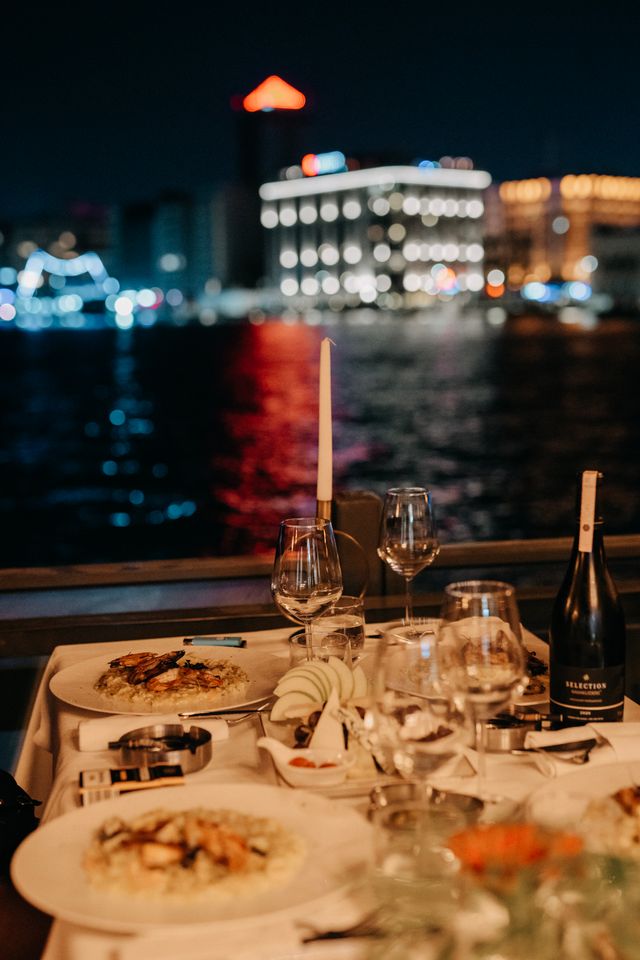
What the Revival Actually Means
The return of tableside preparation is, at its deepest level, a response to a question that tableside dining has been quietly asking itself for the better part of a decade — what is a great restaurant actually for? If the answer is purely the food on the plate, then the kitchen is sufficient and the dining room is simply a delivery mechanism. But if the answer includes something about memory, connection, theater, and the particular pleasure of watching skilled hands do something beautiful in real time, then the dining room has a role that the kitchen cannot fulfill on its own. That broader answer is precisely what the art of tableside dining was always built around.
The guéridon never disappeared because tableside dining & food tastes better — though the immediacy of a sauce finished at the table does produce a freshness that kitchen-to-plate service cannot match. It disappeared because it was expensive and labor-intensive and unfashionable. It is returning because the restaurants bringing it back have remembered something the industry briefly forgot — that tableside dining at its finest is not just eating. It is an experience with a beginning, a middle, and an end, and the moments that happen between the kitchen and the mouth matter just as much as the moments that happen inside it.
The flame still catches. The silver still gleams. And in the best dining rooms in the world, a captain still wheels a small cart to your table with quiet confidence and proceeds to do something in front of you that you will not forget by morning.
That, it turns out, was always the point. And it is the point the art of tableside dining has never really abandoned — only, for a time, misplaced.
They Come To You
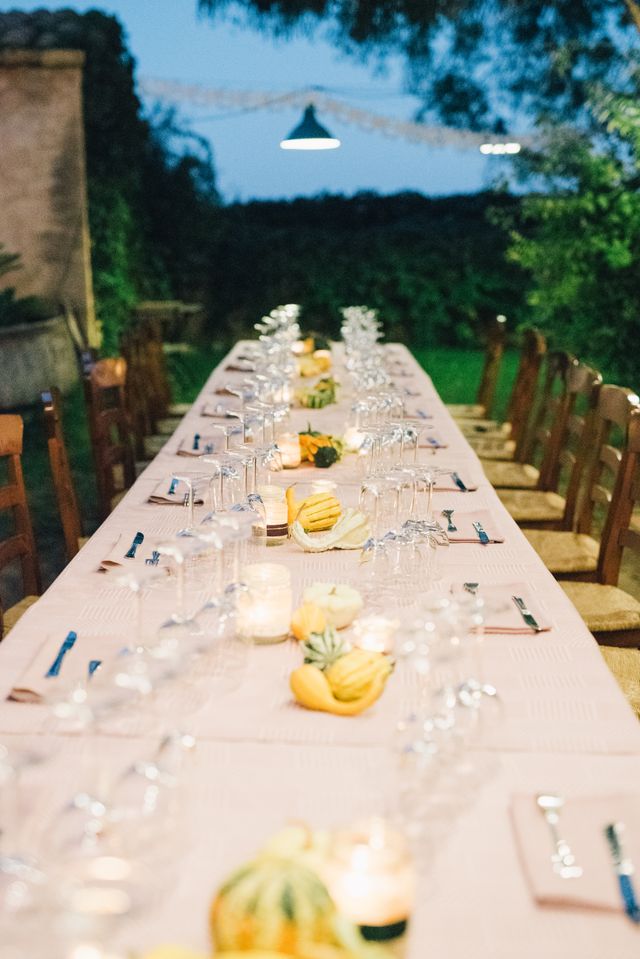
No one embodies this quiet revival more completely than Chef Francis and his partner Debra, whose traveling fine dining service — Fine Dining by Francis — represents the art of fine dining distilled to its purest and most personal form. Francis, a Michelin-starred chef trained in France, does not ask you to come to him. He comes to you. The entire production travels with them: waiters and waitresses in proper service attire, a bartender, pressed napkins, polished silver, fresh flowers, and every ingredient Francis needs to prepare a meal entirely from scratch in your own kitchen. The result is something that no restaurant, however celebrated, can quite replicate — a dinner party of uncommon elegance that unfolds in the intimate surroundings of your own home, prepared by hands that have earned the highest recognition the culinary world confers.
Debra’s contribution to the enterprise is inseparable from its character. She spent years working on Wall Street, where precision, presentation, and the ability to orchestrate high-stakes experiences at the highest level are simply the baseline expectation. When she and Francis found each other, they recognized that their combined skills pointed toward something neither could have built alone — a mobile fine dining experience that travels anywhere their clients are and delivers the full weight of classical European culinary tradition directly to the dinner table. If you are interested in tableside dining, make sure to inquire.